In today’s hyper-connected business environment, growth is no longer driven by isolated efforts. Success increasingly depends on strong, strategic partnerships—including resellers, distributors, affiliates, technology integrators, service providers, and more. As these relationships grow in complexity and scale, businesses need a powerful tool to orchestrate and optimize them. This is where a CRM for managing partner ecosystems becomes essential.
A well-structured CRM system doesn’t just handle sales or customer interactions—it becomes the central hub for partner collaboration, tracking, and performance optimization. By using CRM to manage your partner ecosystem, you gain clarity, control, and consistency in how you work with external stakeholders who influence your revenue and brand reputation.
What Is a Partner Ecosystem?
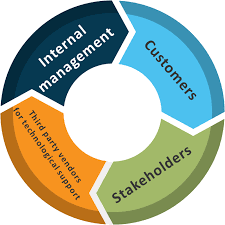
A partner ecosystem refers to the network of external organizations and individuals that collaborate with your business to deliver mutual value. This can include:
- Channel partners (resellers, distributors)
- Affiliate marketers
- Systems integrators
- OEM partners
- Referral partners
- Strategic alliances
- Co-marketing collaborators
Managing such a diverse group requires more than basic contact management. It requires a purpose-built CRM strategy to nurture, activate, and scale these relationships.
Why Use CRM for Managing Partner Ecosystems?
A CRM tailored for partner management ensures that you:
- Centralize partner data and communication
- Track performance and contribution to revenue
- Automate onboarding, training, and engagement
- Improve collaboration through shared portals
- Segment partners by type, region, or tier
- Identify growth opportunities within the ecosystem
With these capabilities, your organization can shift from reactive partner management to a strategic, data-driven partner engagement model.
Key Features of CRM for Partner Ecosystem Management
1. Centralized Partner Database
At the core of partner management is a centralized repository of partner data. A robust CRM allows you to store and access:
- Company profiles and contacts
- Partner tier and status (e.g., Gold, Silver, Bronze)
- Specializations and certifications
- Contract details and expiration dates
- Communication history and meeting logs
This creates a single source of truth for all partner-related data, ensuring consistency across departments like sales, marketing, legal, and support.
2. Onboarding and Training Automation
A CRM can streamline the partner onboarding process, ensuring a consistent and efficient experience that accelerates time-to-revenue. Automate:
- Welcome sequences
- Access to partner portals or resource libraries
- Training modules and certification tracking
- Agreement e-signatures and compliance checklists
Workflow Example:
New partner signs agreement → CRM triggers training sequence → Tracks module completion → Assigns onboarding specialist for check-in.
3. Performance Monitoring and KPIs
To measure the success of your partner ecosystem, CRM dashboards can track:
- Partner-sourced leads and closed deals
- Pipeline value attributed to each partner
- Marketing campaign participation and results
- Product adoption rates by partner accounts
- Tier advancement eligibility (e.g., based on revenue)
These insights help identify your top-performing partners and those who need re-engagement or support.
4. Partner Segmentation and Tiering
Not all partners require the same level of attention or benefits. With CRM segmentation, you can:
- Categorize partners by geography, industry, or product line
- Assign tier-based privileges and commissions
- Personalize communication and support levels
- Create targeted marketing and enablement campaigns
This makes it easier to scale your ecosystem without diluting partner experience.
5. Partner Relationship Lifecycle Management
CRM helps you manage every phase of a partner relationship:
- Recruitment
- Enablement
- Co-selling and co-marketing
- Support and escalation
- Contract renewals
- Performance reviews and re-tiering
With automated alerts and workflows, you ensure no relationship stagnates or falls through the cracks.
6. Co-Marketing and Campaign Collaboration
Many ecosystems thrive through joint marketing initiatives. CRM can help manage:
- Campaign co-registration
- Shared asset distribution
- Partner email campaign tracking
- Event participation records
- Lead attribution and sharing
This level of coordination ensures that marketing ROI is measurable and mutually beneficial.
7. Partner Portal Integration
Some CRMs allow integration with or creation of partner portals, enabling partners to:
- Register leads and deals
- Access marketing and sales collateral
- Track deal status and commission
- Submit support tickets
- Communicate with channel managers
These self-service capabilities increase partner engagement and reduce operational bottlenecks.
Best CRMs for Managing Partner Ecosystems
Several CRM platforms are built or can be configured to support partner ecosystem management:
- Salesforce Partner Relationship Management (PRM) – Enterprise-grade tools for partner onboarding, co-selling, and reporting
- HubSpot CRM with Partner Tools – Ideal for growing businesses seeking easy automation and segmentation
- Zoho CRM Plus – Cost-effective solution with advanced partner tracking and customizable workflows
- Microsoft Dynamics 365 Partner Center – Strong integration with enterprise tools and analytics
- PartnerStack & Impartner – Platforms specifically designed for PRM, often used alongside traditional CRMs
How to Implement CRM for Partner Ecosystem Success
- Define Your Partner Strategy
Segment partners by type and determine success metrics for each category. - Customize CRM Fields and Workflows
Create partner-specific fields, tags, and pipelines to reflect your ecosystem dynamics. - Automate Onboarding and Communication
Set up sequences to train and engage partners efficiently. - Track and Reward Performance
Build reports and dashboards to incentivize desired behaviors and track contributions. - Integrate Portals and Tools
Offer a seamless experience through connected portals or self-service platforms. - Continuously Optimize Based on Data
Use insights to improve partner enablement, reallocate resources, and evolve your strategy.
Industries That Benefit from Partner CRM
- Technology & SaaS – Manage reseller, referral, and integration partners
- Manufacturing – Coordinate distributors, service providers, and logistics partners
- Healthcare & Pharma – Track affiliations with research, distribution, and supply partners
- Financial Services – Manage agents, brokers, and co-branded partners
- eCommerce & Retail – Support affiliate marketers and white-label partnerships
Benefits of Using CRM for Partner Ecosystems
✅ Increased partner engagement and loyalty
✅ Faster onboarding and enablement
✅ Better visibility into partner performance
✅ Improved deal registration and pipeline management
✅ Scalable partner communication strategies
✅ Enhanced ROI from ecosystem investments
Conclusion: Elevate Your Partner Strategy with CRM
Your business partners are more than just third parties—they are extensions of your brand, your strategy, and your customer experience. Managing them with intention, data, and structure is not optional—it’s a strategic necessity.
With a CRM purpose-built for managing partner ecosystems, businesses can create stronger connections, maximize partner value, and drive sustained growth across the entire network.