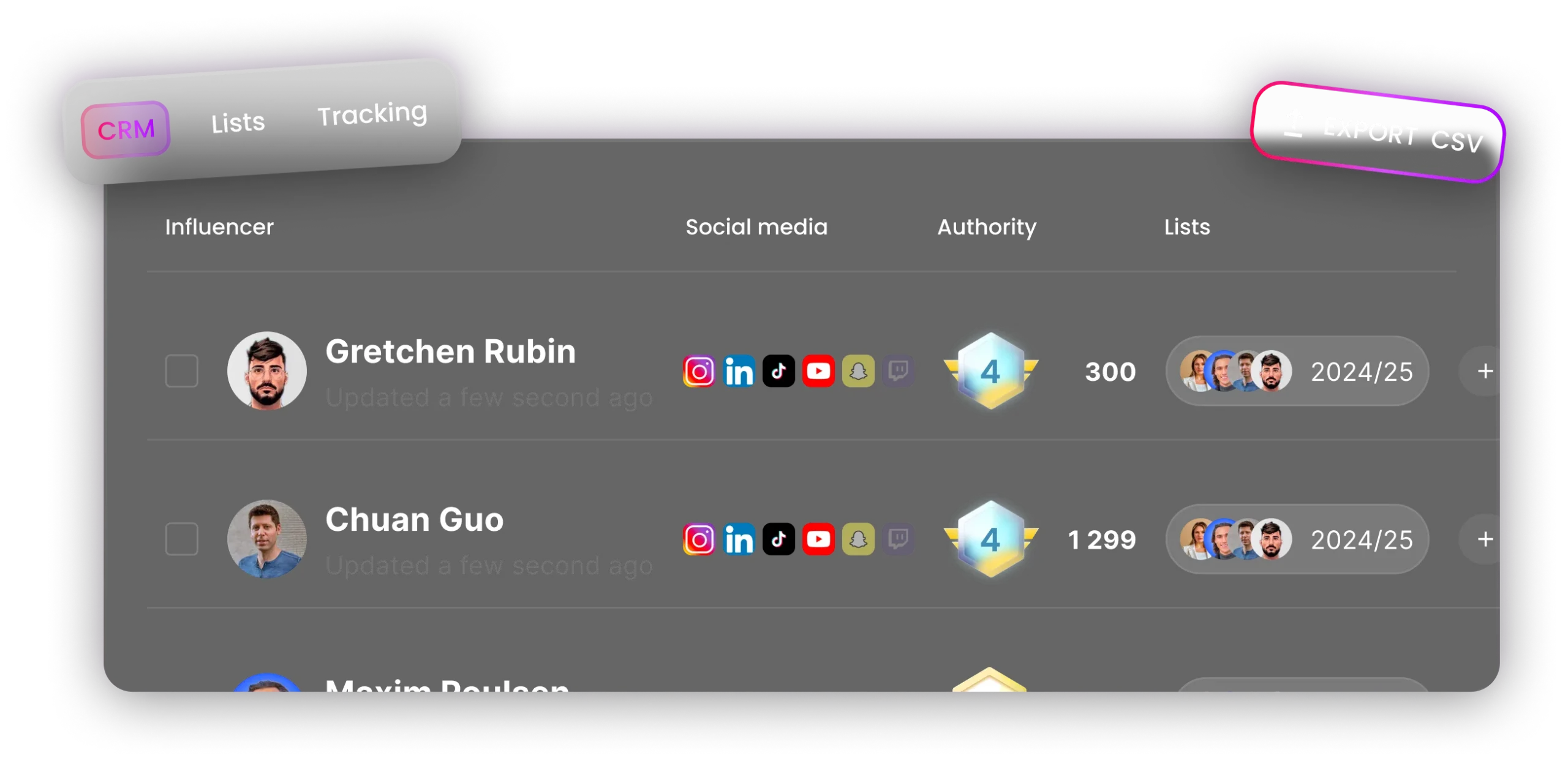
In the digital marketing landscape, influencer partnerships have become one of the most impactful strategies for brand growth. However, managing these relationships effectively at scale requires more than spreadsheets and casual outreach. That’s where a Customer Relationship Management (CRM) system for influencer relationship tracking becomes an essential tool.
A tailored CRM enables brands to build, manage, and optimize influencer partnerships with the same precision and professionalism used in traditional customer pipelines. From initial outreach to long-term collaboration, CRM for influencer relationship tracking ensures that every interaction is strategic, timely, and aligned with business goals.
Why CRM Is Crucial for Influencer Relationship Management
Influencer marketing is no longer a side project—it’s a core growth channel. Brands are investing heavily in partnerships across platforms like Instagram, TikTok, YouTube, LinkedIn, and emerging social networks. But with scale comes complexity.
Managing influencer relationships effectively involves:
- Tracking outreach and campaign status
- Maintaining up-to-date contact details and performance data
- Coordinating follow-ups and deliverables
- Segmenting influencers by niche, performance, or region
- Measuring ROI and campaign impact
A CRM simplifies and systematizes all of these workflows, allowing influencer marketers to focus on building genuine, productive relationships.
Key Benefits of Using CRM for Influencer Relationship Tracking
1. Centralized Influencer Database
Ditch the spreadsheets. A CRM allows you to store and organize all influencer data in one place, including:
- Contact information and social handles
- Engagement metrics and audience demographics
- Past campaign details and performance
- Payment and contract history
- Communication logs
With a centralized system, your entire marketing team can access real-time influencer data, ensuring seamless collaboration and consistency across campaigns.
2. Streamlined Outreach and Follow-Up
CRM automation allows you to:
- Segment influencers by industry, platform, or tier
- Send personalized outreach emails or DMs
- Set follow-up reminders and engagement tasks
- Track who responded, declined, or requested a later time
This helps teams avoid missed opportunities and maintain a professional and proactive communication cadence with influencers.
Pro Tip: Use templates and workflow automation to personalize bulk outreach while saving time.
3. Influencer Segmentation and Scoring
Not all influencers are equal. CRMs allow you to categorize and score influencers based on:
- Follower count and engagement rate
- Platform specialization (e.g., Instagram vs. TikTok)
- Past performance (clicks, conversions, reach)
- Niche or content type (beauty, fitness, tech, etc.)
This data-driven segmentation helps you prioritize high-impact creators and build tiered partnership models (ambassadors, affiliates, VIPs, etc.).
4. Campaign Tracking and Management
CRMs enable detailed campaign oversight, allowing you to:
- Assign influencers to specific campaigns
- Track deliverables (posts, stories, videos, reels)
- Set due dates and deadlines
- Store links and media assets
- Monitor campaign progress in real time
Everything is documented in one place, reducing miscommunication and ensuring that all parties stay on schedule.
Example Workflow:
Influencer accepts partnership → CRM triggers deliverables checklist → Content submitted → CRM logs performance stats and triggers thank-you note or renewal offer.
5. Performance Analytics and ROI Tracking
One of the biggest challenges in influencer marketing is measuring impact. A CRM integrated with analytics tools can help track:
- Click-through rates (CTR)
- Conversion rates from influencer links
- Engagement levels on campaign content
- Sales generated by unique influencer codes
- Cost per acquisition (CPA)
With this data, you can easily compare influencer performance, adjust budgets, and optimize future collaborations based on ROI—not assumptions.
6. Relationship Building and Long-Term Collaboration
Influencer marketing works best when it’s relationship-driven, not transactional. A CRM helps brands:
- Track important milestones (birthdays, anniversaries, past partnerships)
- Send personalized gifts or thank-you notes
- Plan re-engagement campaigns
- Move influencers up the funnel—from tester to ambassador to brand advocate
This structured approach fosters loyalty and increases the lifetime value of influencer relationships.
Top CRM Features for Influencer Management
To get the most out of CRM for influencer tracking, ensure your platform supports:
- Custom Fields – Add social stats, niche, rates, and content preferences
- Workflow Automation – Schedule follow-ups and campaign stages
- Email & Social Integration – Communicate without leaving the CRM
- Tagging & Segmentation – Group influencers for targeted campaigns
- Notes & Activity Logs – Keep track of every interaction
- Analytics & Reporting – Monitor performance and ROI
- Collaboration Tools – Share access with your marketing and creative teams
Best CRMs for Influencer Relationship Tracking
Not all CRMs are influencer-ready out of the box. However, the following platforms offer powerful customization and integrations suitable for this use case:
- HubSpot CRM – Highly customizable with strong email and automation tools
- Airtable – A lightweight, spreadsheet-style CRM perfect for influencer tracking
- Salesforce – Ideal for large teams needing robust automation and segmentation
- Monday.com CRM – Visual and intuitive for managing campaign timelines
- Nimble – Built for social selling, with excellent social media data gathering
- Upfluence & Aspire – Niche platforms built specifically for influencer relationship management
How to Set Up Your Influencer CRM Workflow
- Import Influencer Data
Gather info from existing partnerships, outreach lists, and discovery tools. - Create Custom Fields & Tags
Include fields for platform, audience size, rates, engagement metrics, and niche. - Segment Your List
Group influencers by campaign, region, performance tier, or content focus. - Build Outreach Workflows
Set up automated tasks, follow-ups, and personalized outreach messages. - Track Campaign Progress
Assign influencers to specific campaigns and monitor deliverables and deadlines. - Measure and Optimize
Use reports and analytics to refine your strategy and strengthen your top partnerships.
Real-World Use Case: CRM-Driven Influencer Success
A fashion brand working with 250+ influencers across Instagram and TikTok implemented a CRM to manage:
- Initial discovery and vetting
- Outreach and contract tracking
- Real-time performance analytics
- Automated follow-up for future collaborations
Within six months, the brand improved campaign completion rates by 42%, increased average influencer ROI by 27%, and retained 68% of influencers for repeat campaigns—all driven by CRM-powered workflows.
Conclusion: Elevate Influencer Marketing with CRM
As influencer marketing continues to grow in scope and complexity, businesses need a smarter, more strategic approach to managing these valuable partnerships. A CRM system tailored for influencer relationship tracking is no longer optional—it’s the backbone of scalable, successful, and data-driven influencer programs.